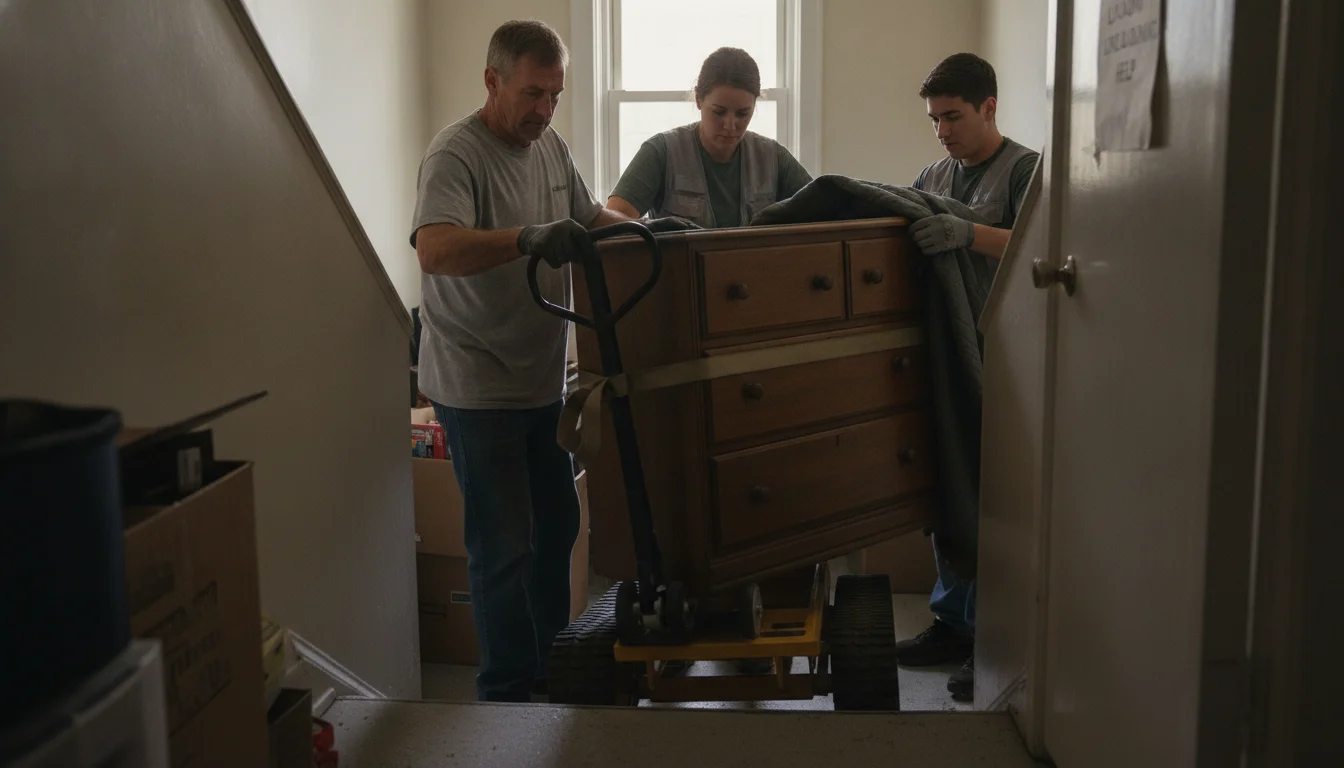
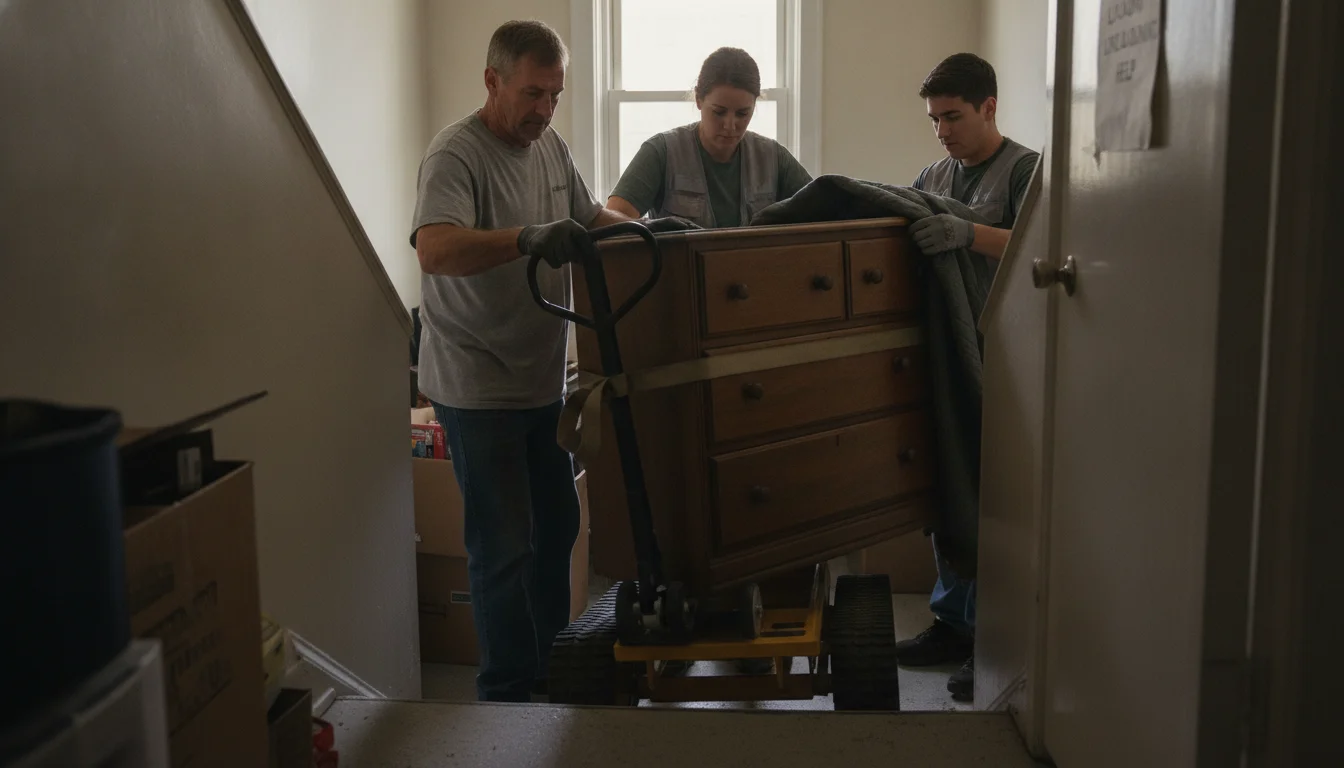
To learn how to move heavy furniture by yourself, map the route, protect floors, and use simple tools like sliders, a dolly, and lifting straps. Keep a neutral spine, lift with your legs, and use tilt–pivot moves for tight spaces. Remove doors or legs when needed, and if a task feels risky, stop and get help from local pros.
Spartanburg Movers helps people work smarter, not harder across Spartanburg and nearby neighborhoods. This guide breaks down safe, practical methods you can use at home or at work, drawing on everyday tools and clear steps. You’ll learn how to plan paths, handle stairs and narrow doorways, and recognize the moments when it’s smarter to pause and bring in help from Local Movers or Loading & Unloading Help.
Table of Contents
- What should you do before moving heavy furniture alone?
- Which tools make moving heavy furniture easier without help?
- How do you lift and carry heavy furniture safely?
- How do you get bulky items through tight doors and hallways?
- What’s the best way to move heavy furniture up or down stairs solo?
- How can you move heavy furniture without a truck?
- When should you not move heavy furniture by yourself?
- Key takeaways
- Frequently Asked Questions
- Conclusion
What should you do before moving heavy furniture alone?
Measure the piece and the entire route first. Record door, hallway, stair, and landing widths and heights, plus any tight turns. Sketch a simple plan with measurements. Clear clutter, cords, and throw rugs. Protect floors with cardboard, blankets, or sliders. Tape drawers shut and remove loose parts. A few prep minutes prevent scrapes, jams, and slips.
Good prep starts with a tape measure and a notepad. Measure length, width, and height of the item; keep the largest number in mind. Now check each doorway and turn on the way out. If any opening is smaller, plan for a tilt, a corner-first move, or quick disassembly. Draw the path so you can anticipate pinch points before you lift.
Spend five minutes clearing hazards. Pick up shoes and toys. Coil and tape cords out of the walkway. If you have pets or kids, set a safe zone so they don’t dart underfoot. Place cardboard paths on wood or tile to prevent scuffs. On carpet, slide furniture glides under each leg before pushing.
Protect the furniture itself. Remove glass shelves and wrap them. Twist off loose legs or knobs if they come off by hand. Use painter’s tape to secure doors and drawers. Wrap corners with moving blankets and tape so the padding stays put. Mark sharp edges with bright tape to see them clearly while turning.
How to measure and map the route
- Measure the furniture’s three sides.
- Measure doors, halls, stairwells, and landings.
- Sketch the path with sizes. Mark tight turns.
- Plan a tilt or disassembly if the fit is close.
How to clear hazards and protect floors
- Remove clutter and roll up rugs.
- Lay cardboard or blankets for a smooth path.
- Add sliders under feet on carpet or heavy tile.
- Keep kids and pets in another room.
Which tools make moving heavy furniture easier without help?
Start with reliable helpers: furniture sliders, a dolly, and lifting straps. Sliders cut friction so you can push with less effort. A dolly shifts weight to wheels so you roll instead of carry. Straps transfer the load to your legs and shoulders. Moving blankets, painter’s tape, and basic hand tools protect surfaces and help you fit through snug spaces.
Use sliders under each leg on carpet. On hard floors, choose felt-side sliders or place a folded blanket under the base. When using a dolly, center the weight, strap it firmly, and keep a guiding hand near the top edge. With lifting straps, stand close, keep your back straight, bend your knees, and rise with your legs. For solo use, looping a strap under one side can help tip and walk a corner.
You’ll use moving blankets more than you think. Wrap items to prevent scuffs. Fold a blanket into a pad to smooth over small thresholds. Tape blankets in place with packing tape, not duct tape that can leave residue. Keep a screwdriver, adjustable wrench, and Allen keys in your pocket to pop off sofa legs or door hinges quickly.
If you’re packing dishes from a hutch or sideboard, remove and pack them first so the cabinet is lighter. Wrap plates in bubble wrap with a plate-sized sheet between each one, then stand plates on edge in a small box. Add paper between bowls to prevent clinking. Lighter furniture is safer to move.
Using sliders, dollies, and lifting straps the right way
- Sliders cut friction; use felt on wood, plastic on carpet.
- Dollies carry the weight; center and strap the load.
- Straps shift weight to legs; adjust length for your height.
Moving blankets, tape, and basic hand tools you’ll actually use
- Blankets prevent scrapes and help glide over thresholds.
- Painter’s tape holds doors shut without residue.
- Screwdriver, wrench, and Allen keys for fast disassembly.
How do you lift and carry heavy furniture safely?
Lift with your legs, not your back. Keep the item close to your body and your spine neutral. Avoid twisting under load; pivot your feet instead. Take small steps and breathe steadily. If the piece sits too low to grip, tip it and slide a block underneath to raise the hold point before lifting.
Body mechanics matter. A neutral spine means straight—not rounded or arched. Let your hips and knees do the work. Brace your core and keep elbows in. When you turn, move your feet so your hips and shoulders stay in line. This reduces strain and keeps the load stable. Control is the goal, not speed.
Leverage helps. Tip tall pieces slightly and “walk” one corner forward. For a couch, stand it on end if the ceiling allows, then tilt and pivot the base like an L-shape. For a dresser, remove drawers so the frame is lighter. A forearm forklift–style strap transfers load to your legs; adjust it so the weight sits around mid-thigh height.
Simple aids can act like a helper. A door wedge holds doors open while you pass. A small step stool can lift a corner so you can slide a dolly underneath. Wear grippy gloves for a steadier hold. Use a ratchet strap to cinch a slippery mattress to a dolly. For safety guidance on lifting, review basic ergonomics from OSHA. Always stop if you feel pain or start to lose balance.
Body mechanics and leverage 101
- Keep a neutral spine, chest up, and core tight.
- Bend knees and hips; do not round your back.
- Pivot feet to turn; do not twist under load.
When and how to use simple aids as your “second pair of hands”
- Wedges, stools, and straps hold, lift, or steady items.
- Ratchet straps and tape tame loose parts and cushions.
- Gloves improve grip and protect knuckles.
How do you get bulky items through tight doors and hallways?
Use rotate–tilt–pivot. Angle the piece to the doorway, tilt to reduce its profile, then pivot the long side through first. Work slowly. Watch the top corners and the base. If you need another inch, remove the door from its hinges. Taking off sofa legs or feet can create the space you need.
Think of the item as a rectangular box. You want the smallest face of that box to pass through first. With a couch, tip the back toward the hinge side, rotate the base through, then pivot the remainder. With a tall dresser, tilt the top away from the frame while you swing the bottom through, then rotate the top inside. Pad corners with blankets to protect both furniture and paint.
Disassembly often wins. Pop off sofa legs, remove recliner feet, and separate tabletops from bases. Label parts with painter’s tape and note their location. Bag screws and tape the bag to the main piece so nothing gets lost. A Phillips screwdriver and Allen keys handle most fasteners.
If you hit a pinch point, stop and reset. Slide in a blanket to guard the jamb, then try a new angle. A small tilt can change the fit a lot. If the item has a glass top or shelves, remove them before attempting the doorway. For very narrow turns, lifting a corner onto a dolly can give you a smooth pivot base.
The rotate–tilt–pivot method (the geometry that works)
- Rotate the narrowest edge toward the frame.
- Tilt to make the profile smaller.
- Pivot the long side through, guiding corners.
Removing doors and smart disassembly steps
- Pull hinge pins and lift the door free for extra width.
- Remove legs, feet, or arms that add inches.
- Label parts and bag hardware to keep it together.
What’s the best way to move heavy furniture up or down stairs solo?
Prepare a safe route before you move. Clear each step. Wear shoes with good traction. Use a stair-rated hand truck if you have one. If not, create a slide with blankets and cardboard. Strap the item to the dolly—or strap loose parts to the item itself. Move a single step at a time and keep the load low and centered.
A stair slide is straightforward. Lay moving blankets on the stairs, then place flat cardboard over them to reduce friction. Tape edges so nothing catches. For going down, stand above the load and guide it, keeping steady tension so it doesn’t accelerate. For going up, push from below only when the weight is truly manageable. Heavier items are safer with a proper stair hand truck.
Secure the load well. Wrap with stretch film or rope. On a dolly, use two straps: one at mid-height and one higher up. Keep your hands on the dolly frame, not under the furniture. Pause at landings to rest and reset your grip. If the stairs are narrow with a sharp turn, move the piece to a vertical position if the height allows, then pivot the base on the landing.
Control is the rule on stairs. Take small steps and keep your hips behind the load when descending so you can resist its pull. When ascending, stay chest-close to the item. If the weight starts to pull you off balance, set it down immediately. Never rush. For pianos, gun safes, or stone tops, this is a do-not-DIY case. Call Same-Day & Last-Minute Movers or Furniture Movers.
Building a safe stair slide or ramp
- Layer blankets and cardboard; tape edges flat.
- Use a stair hand truck when possible.
- Guide from above when going down; control is key.
Securing loads and controlling balance on each step
- Strap tight in two places to stop shifting.
- Keep weight centered; avoid side tilts.
- Rest at landings and check your grip.
How can you move heavy furniture without a truck?
You have choices. Rent short-term, use a hitch-mounted cargo platform, or book curb-to-door pickup. For small moves, an SUV, wagon, or minivan can work with seats folded. Protect the furniture and your vehicle, and secure everything well. Never block mirrors or windows. Keep weight within your vehicle’s limits.
Short-term rentals from local hardware stores or rental centers can be hourly. A small box truck or cargo van is simple to drive. If you’d rather not drive, consider store delivery combined with Loading & Unloading Help for carry-in at home. A hitch cargo carrier or a small folding trailer can move a dresser or couch a short distance. Check lighting, tie-downs, and local rules before driving.
Pack the vehicle like a moving box. Lay a blanket on the floor and protect side panels. Load the largest, heaviest item first, tight to the front. Wedge it so it can’t roll. Use ratchet straps on built-in tie-down points. Keep glass and mirrors upright. Place foam, towels, or cardboard between items so they can’t rub.
Protect during transport. Pad with blankets, then add stretch wrap to hold pads in place. Close doors without pressing against fabric to avoid wear. Don’t let mattresses hang out of the trunk. A mattress should ride flat in a van, or on its side and strapped securely. If rain starts, add a tarp over the wrap. For longer trips, Local Movers or Apartment Movers are safer and more efficient.
Short-term rentals, cargo platforms, and curb-to-door options
- Hourly cargo vans and box trucks are widely available.
- Hitch carriers or small trailers fit a few big items.
- Store delivery plus unloading help saves time.
Protecting items during transport in small vehicles
- Pad floors and walls; strap to tie-down points.
- Wrap with blankets and stretch film.
- Keep glass upright and mattresses secured.
When should you not move heavy furniture by yourself?
Don’t move it solo if the weight is unknown, if it’s bulky and fragile, or if stairs and tight turns make control difficult. If you have a history of back or knee problems, skip it. Items like pianos, safes, large aquariums, or stone and marble tops are high risk. A small scratch or injury can cost more than a helper.
Red flags are easy to spot. The item scrapes floors even with sliders. The piece tilts in ways you can’t control. Your grip slips even with gloves. The route includes steep stairs, spirals, or a narrow landing. The piece is taller than the ceiling height when stood up. If more than one of these risks show up together, stop and rethink.
Think in trade-offs: time, safety, and the chance of damage form a triangle. If you speed up, risk rises. If you go slower and add protection, risk falls. Often the best move is to remove legs and doors, or split a large unit before any lift. When that still isn’t enough, bring in help.
Safer options exist. Book Loading & Unloading Help for extra muscle. Furniture Movers handle bulky, delicate, and stair-heavy items. Commercial & Office Movers can move desks, servers, and copiers with less downtime. Local Movers can rearrange rooms, handle short hops across town, or move from storage. Ask Spartanburg Movers what services and assistance may fit your furniture and route. If you search “movers near me,” compare services and reviews, then choose the support that fits your move.
Red flags, weight limits, and risk trade-offs
- Unknown weight or center of gravity.
- Tight stairs, spiral turns, or low ceilings.
- Fragile tops: glass, stone, or slate.
Safer alternatives and when to call in help
- Hire Loading & Unloading Help for muscle only.
- Choose Furniture Movers for tricky pieces or stairs.
- Use Local Movers or Apartment Movers for small full moves.
Key takeaways
- Plan the path, measure, and clear hazards before any lift.
- Use sliders, a dolly, straps, and blankets to protect your back and floors.
- Rely on rotate–tilt–pivot for tight doors; remove legs or doors when needed.
- On stairs, build a slide and move one step at a time with the load centered.
- If risks stack up, pause and bring in help from pros like Spartanburg Movers.
Frequently Asked Questions
How do I move a couch by myself through a door?
Stand the couch on end if the ceiling height allows. Rotate the base toward the hinge side, tilt to slim the profile, and pivot the long side through. Remove legs for a little extra clearance, pad the corners, and move slowly. If it binds, take the door off its hinges.
What is the safest way to move a mattress alone?
Use a mattress bag or stretch wrap for grip and protection. Fold a flexible foam mattress and strap it if the manufacturer allows. For standard mattresses, stand it on edge, strap it to a dolly, and keep it upright. Don’t bend it over sharp edges or drag it.
Can I slide a dresser on hardwood without damage?
Yes—if you protect the floor first. Use felt-side sliders under each leg, or slip a padded moving blanket under the whole base and pull gently. Keep the path clean. Lift corners slightly to reduce friction so grit can’t scratch the surface.
How do I move a fish tank safely?
Empty it first. Save tank water for the fish in clean containers. Remove gravel and decor. Move the empty tank only, padded with blankets and carried on a flat board or dolly. Refill and recondition water before returning fish. Never move a filled tank; glass can crack.
How should I pack dishes so a hutch is lighter to move?
Pack plates on edge in small boxes with bubble wrap between each plate. Wrap bowls with paper between layers. Fill gaps with soft towels so nothing shifts. Label “Fragile” and “This Side Up.” With the weight gone, the hutch frame is much easier and safer to move.
Conclusion
Moving heavy furniture solo is achievable with a plan, the right tools, and safe technique. Measure the route, protect floors, use sliders and a dolly, and go slowly. Know when to stop and call help. Spartanburg Movers serves Spartanburg and the wider Upstate, and can send Furniture Movers or Loading & Unloading Help when you need a team.
If you are not sure a piece is safe to move alone, it is worth asking for help before anyone gets hurt. Get in touch with Spartanburg Movers today and we will tell you where you stand.